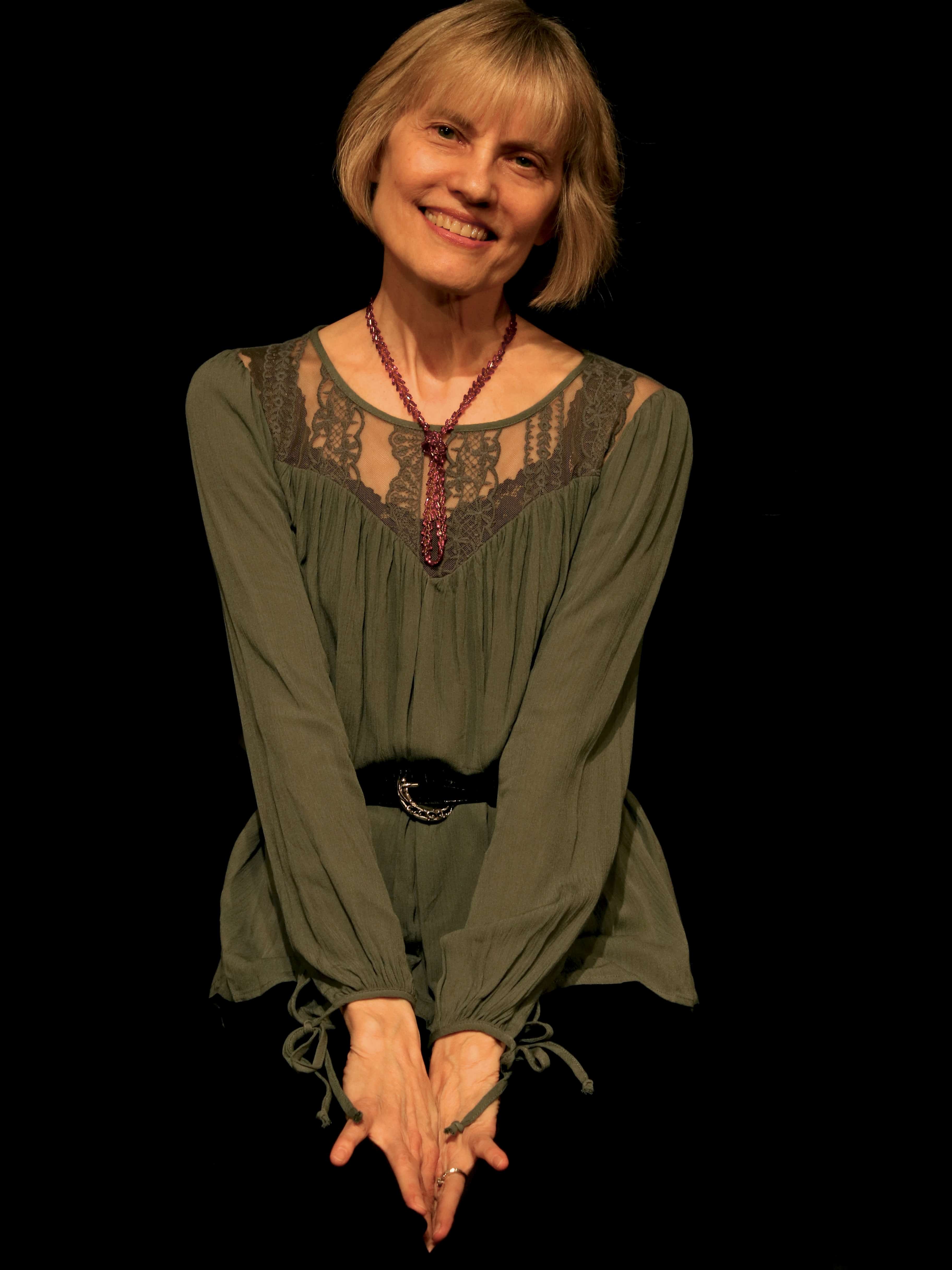
 Donna Salli is Finnish-American, on both sides of a large extended family. She was born and raised in Michigan along the shores of Lake Superior, and like the characters in her novel, A Notion of Pelicans, she has a fascination for the big lake.
Her family also lived, when she was in first grade, with her paternal grandparents on their northern Wisconsin dairy farm. The house had a single water faucet in the kitchen that delivered icy cold water from the well—there was no hot water, no toilet or bath, no central heat. Ironically, in that primitive house, she was given a deep love for the life of the mind and the written word. Every night as her mother tucked Donna and her younger brother into bed, she read poetry and stories to them.
Donna writes in multiple genres—poetry, fiction, drama, and the essay. Her creative work focuses on family, heritage, spirituality, changing gender roles, and other social issues.
For more information about her education, publications, and interests, click here.
Latest Blog Posts

Through a Glass, Darkly: On Buses, Borders, and the Color Blue
I love this picture. It has that lovely blue cast to it. I was on a night bus, alone. The driver and other passengers had gone into a convenience store. Tired, only minutes from my hometown and the family farm, I snapped a picture of my reflection in the window and texted it to my husband, so he’d know I was almost there. You see, he worries. As he often will, he enlarged and cropped the photo and sent it back. The image in the window, with a light pole and tire rims beyond the glass, seems to hang outside the border of this world. It’s a landscape where you wouldn’t be surprised to see an angel, dropping in to help. In that moment, I thought of 1 Corinthians, the verse that says we see “through a glass darkly.” In other words, we don’t see. There’s so much trouble now, with neighbors, friends, even family turning against one another, arguing, among other things, over immigrants and how we should control our national borders. I sigh as I say it—we sure could use an angel or two. Sometimes I wonder if a day will come when humans just stop helping each other.

Damn Hard Work: Christmas, 1953
I’d worked three days, writing the essay. Three days of reflection on the ways in which the people in this family picture had shaped me. Yesterday, I shared the draft with my husband, as I always do—and he basically said (though trying to be kind), “Who cares? So—it’s your family. I can’t see what the point is.” I can’t say that his response surprised me. Bruce is a writer who worked as an editor for a literary journal. He speaks aloud what my own writerly instincts are whispering. “You should write this for the New Yorker,” he said. “That audience.” Well, I figured I should just bury the corpse and be done with it. “Okay,” I said, “I’m going to go out and lie in the street now and wait for a car to run over me.” I was laughing, painfully. He was laughing, having been in the same position many times, and at my hands. It’s morning now, and I know exactly why I’m writing this essay. It’s about family, yes—and, because of what I know about my own family’s history, it’s about immigrants, and poverty, and the damn hard work of building a life—the damn hard work, too, of writing something worth reading.

Tracks
I love this picture, rocking my button of a purse, my cute little hat. I look ready to make tracks on my trike, parked there behind me. I’m in my seventies now, and I’m thinking hard about my life—looking back, and of course wondering what time I have left. Have you ever been on a train as it crawls through a switching yard? Tracks go helter-skelter, crossing one another, this way, then that. At different junctures, I’ve turned down a new track—because I wanted to, at other times because I had to. As a writer, it seems natural to me to think out loud about my experiences. The poet Emily Dickinson said, presumably about herself, “I’m Nobody! Who are you?” Her approach to life rings true for me. I think we’re born to figure out who we are, and why we are—unpretentiously is my preference—and to honor and respect other people in their searching.
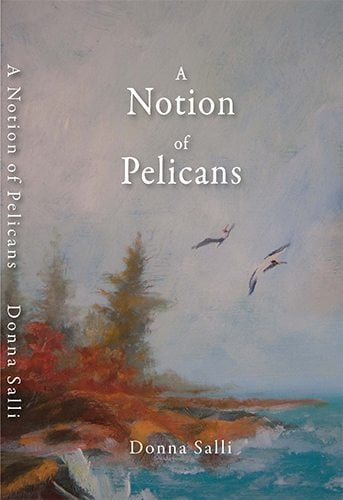
A Notion of Pelicans – by Donna Salli
On a windblown bluff above Lake Superior sits a fieldstone church. Founded one hundred years ago after a puzzling encounter with a flock of pelicans left Lavinia with a curious notion, Pelican Church still draws inquisitive souls to its pews with the legend that one solitary bird still circles overhead, watching.
These people have notions of their own — a pastor’s wife wants a honeymoon, a professor has harebrained ideas, a business owner is in everyone’s face, a young actress can do or be anything onstage yet struggles with every real-life decision — and their stories, tucked away for years, unfold and glide onto the pages of Donna Salli’s intimate debut novel.
The people of Pelican Church are oh-so-human and expose their mix of shifting hopes and obsessions, protected infidelities, and notions gone awry as one October day swings from sunup to sundown under the watchful gaze of a single pelican.