Rocks & Roots
Donna Salli
Click on image to read blog post

The Mirror
I once imagined that a writer sits around with a martini and a typewriter, leisurely typing, as the Pulitzers and Nobel prizes roll in. What a pile of horse manure. My husband Bruce and I are writers. There had better be a damn good reason to interrupt when the other one is in the throes of working on something. It’s like looking in the mirror. What I do, he does. He’ll be at his desk, I walk in, and the hand flutters up, warning me away, followed by the sideward glance, and the glance always does it. I start thinking—today, about places I’ve lived. Some have been memorable, like an apartment where the landlady lived downstairs, her two deceased Pekingese dogs mounted and displayed in a lighted glass case. It was a bit unnerving, but now I see the love she had for them, and likely the loneliness. The place I think about most, though, isn’t that one. It was a corner apartment next to a funeral chapel, the apartment with a voice in the mirror.

Schrödinger’s Cat: A Story from the Almost Real World
Strange things happen, unexpected things, here at my house. It’s in a quiet woods, a small stream running just behind. We live with turkeys, squirrels, and deer, and the more elusive coyote and fox. Day and night, they amble or scurry by, just off the patio. Decades ago, I left my first teaching job, got married, joined my husband here. I’ve lived by the mantra that things work out. I’d been an assistant professor and had a decision to make: stay, and go where the job would lead me? or leave for love? I chose love. And yes, I eventually began teaching again. Now retired, and lately feeling the need to challenge my aging brain cells, I’ve been ending my days bundled up in bed, reading about quantum physics. That brings me to my late friend Ralph, who is strangely wrapped up in this story. An aging bachelor, his office was next to mine at that first job. It, oddly, brings me, too, to Schrödinger’s cat, the hypothetical cat in a hypothetical box, who is dead or alive when the box is opened—one theory being that its fate is determined, somehow, by being observed. Don’t worry. The heart of this story is not physics.

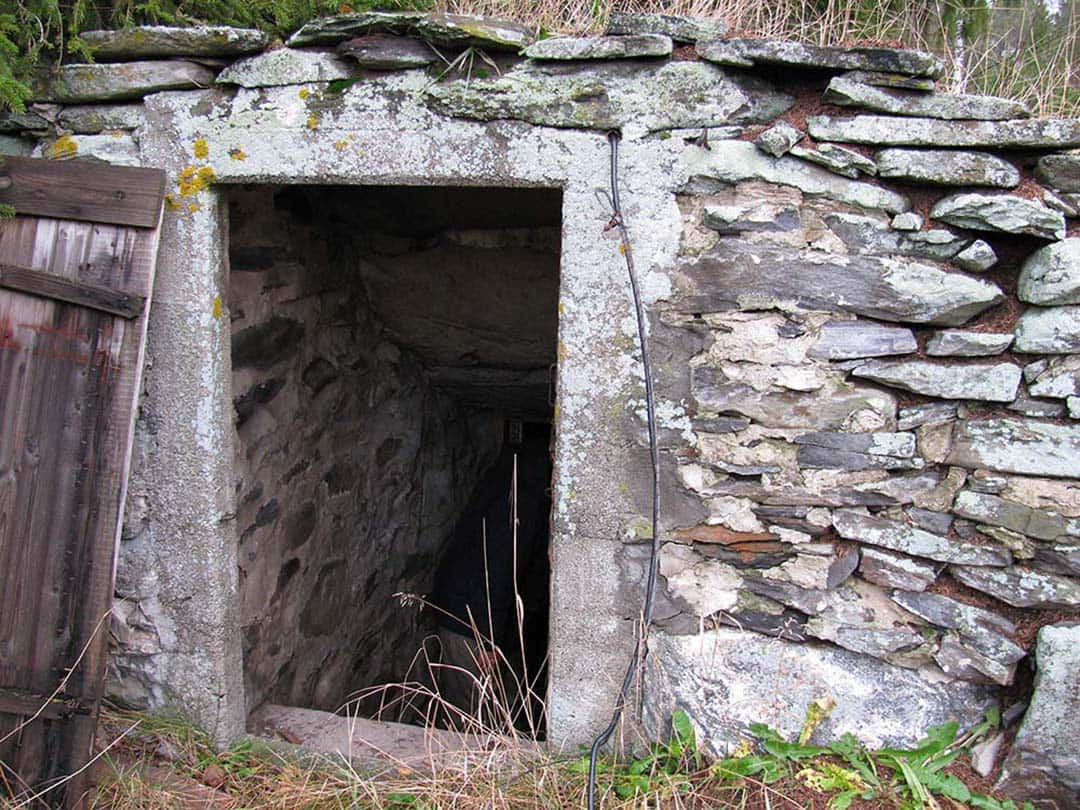
Wonder: A Staircase Built of Stone
I took the photo above in eastern Finland. It was late October, and I was at a country home not far from the Russian border. 50 miles or so. It felt surreal to be there, knowing the fraught history Finland has with Russia. But it also felt like home. That staircase built of stone was part of an old root cellar. My mother’s Finnish immigrant father constructed a staircase identical to it, to connect the basement of his Michigan farmhouse to the yard. He dug the basement a good while after the house had been built. I’ve often felt wonder about that—the logistics of it, the progression of his thinking and efforts. It makes me think of the progression of my own life. I’d like to understand, I mean really understand, what this life is about.

The How and Why: A Mystery
My sister Doreen and I are poets. Recently, without discussion, 650 miles apart, on the exact same day, we each wrote a new poem. Something in the way our country has been changing is driving poets to pick up their pens. In this essay, which we’re writing together, we’d like to share the poems we wrote so unknowingly and mysteriously on that day, to explain the how and why: how it is we wrote them, why we see the things we wrote as mattering to more than ourselves. We live, after all, in a large community called the United States, made up of smaller communities with their own integrity and cultures. How do we live good, honorable lives as individuals? How do we turn outward and live with concern for the group? Poetry is a way of thinking about those things—it’s one part language, nine parts nuance. …

Through a Glass, Darkly: On Buses, Borders, and the Color Blue
I love this picture. It has that lovely blue cast to it. I was on a night bus, alone. The driver and other passengers had gone into a convenience store. Tired, only minutes from my hometown and the family farm, I snapped a picture of my reflection in the window and texted it to my husband, so he’d know I was almost there. You see, he worries. As he often will, he enlarged and cropped the photo and sent it back. The image in the window, with a light pole and tire rims beyond the glass, seems to hang outside the border of this world. It’s a landscape where you wouldn’t be surprised to see an angel, dropping in to help. In that moment, I thought of 1 Corinthians, the verse that says we see “through a glass darkly.” In other words, we don’t see. There’s so much trouble now, with neighbors, friends, even family turning against one another, arguing, among other things, over immigrants and how we should control our national borders. I sigh as I say it—we sure could use an angel or two. Sometimes I wonder if a day will come when humans just stop helping each other. …

Damn Hard Work: Christmas, 1953
I’d worked three days, writing the essay. Three days of reflection on the ways in which the people in this family picture had shaped me. Yesterday, I shared the draft with my husband, as I always do—and he basically said (though trying to be kind), “Who cares? So—it’s your family. I can’t see what the point is.” I can’t say that his response surprised me. Bruce is a writer who worked as an editor for a literary journal. He speaks aloud what my own writerly instincts are whispering. “You should write this for the New Yorker,” he said. “That audience.” Well, I figured I should just bury the corpse and be done with it. “Okay,” I said, “I’m going to go out and lie in the street now and wait for a car to run over me.” I was laughing, painfully. He was laughing, having been in the same position many times, and at my hands. It’s morning now, and I know exactly why I’m writing this essay. It’s about family, yes—and, because of what I know about my own family’s history, it’s about immigrants, and poverty, and the damn hard work of building a life—the damn hard work, too, of writing something worth reading. …